Patented metamaterial
Soundproofingreimagined


Partners & Clients












About ABSORA-sheet
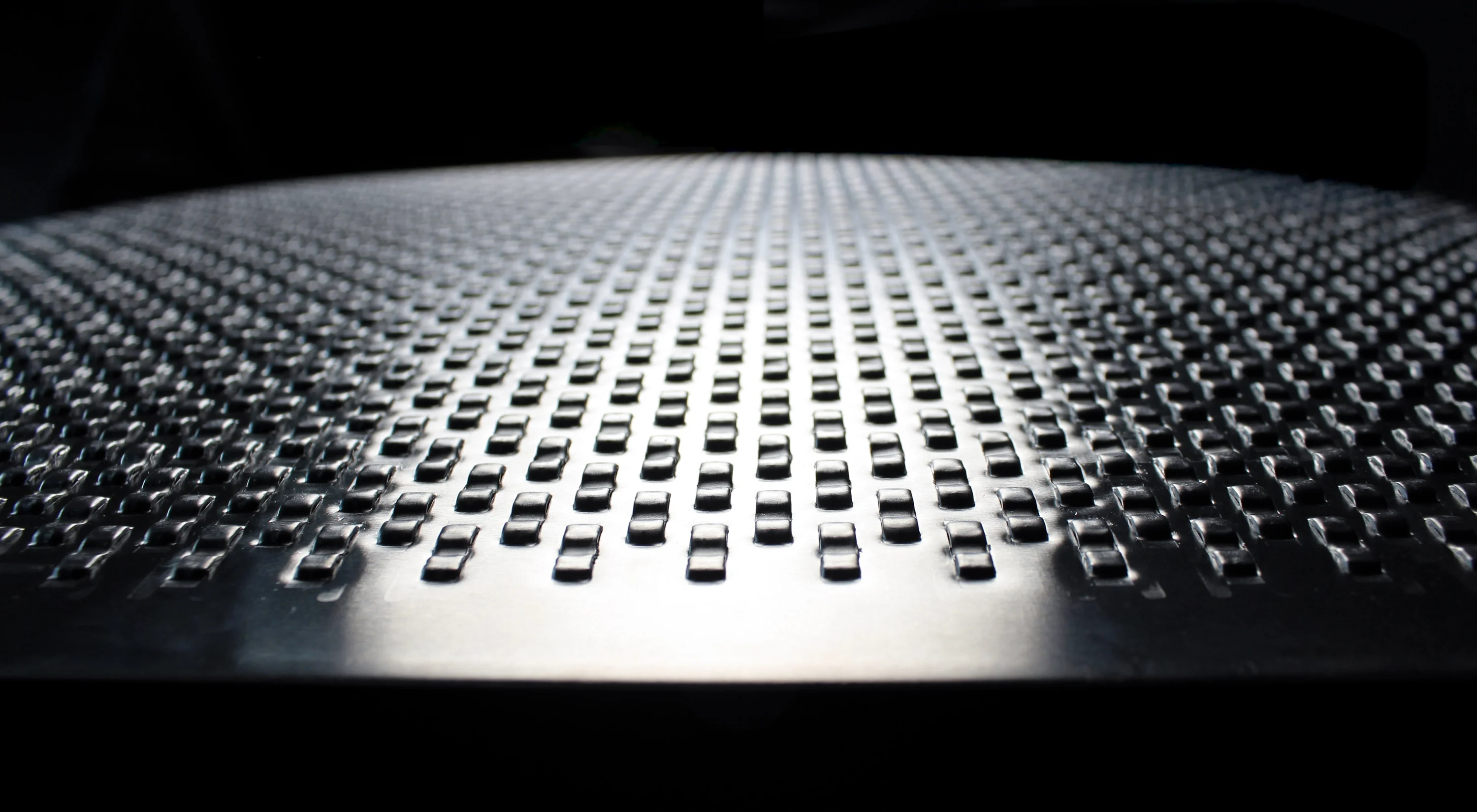
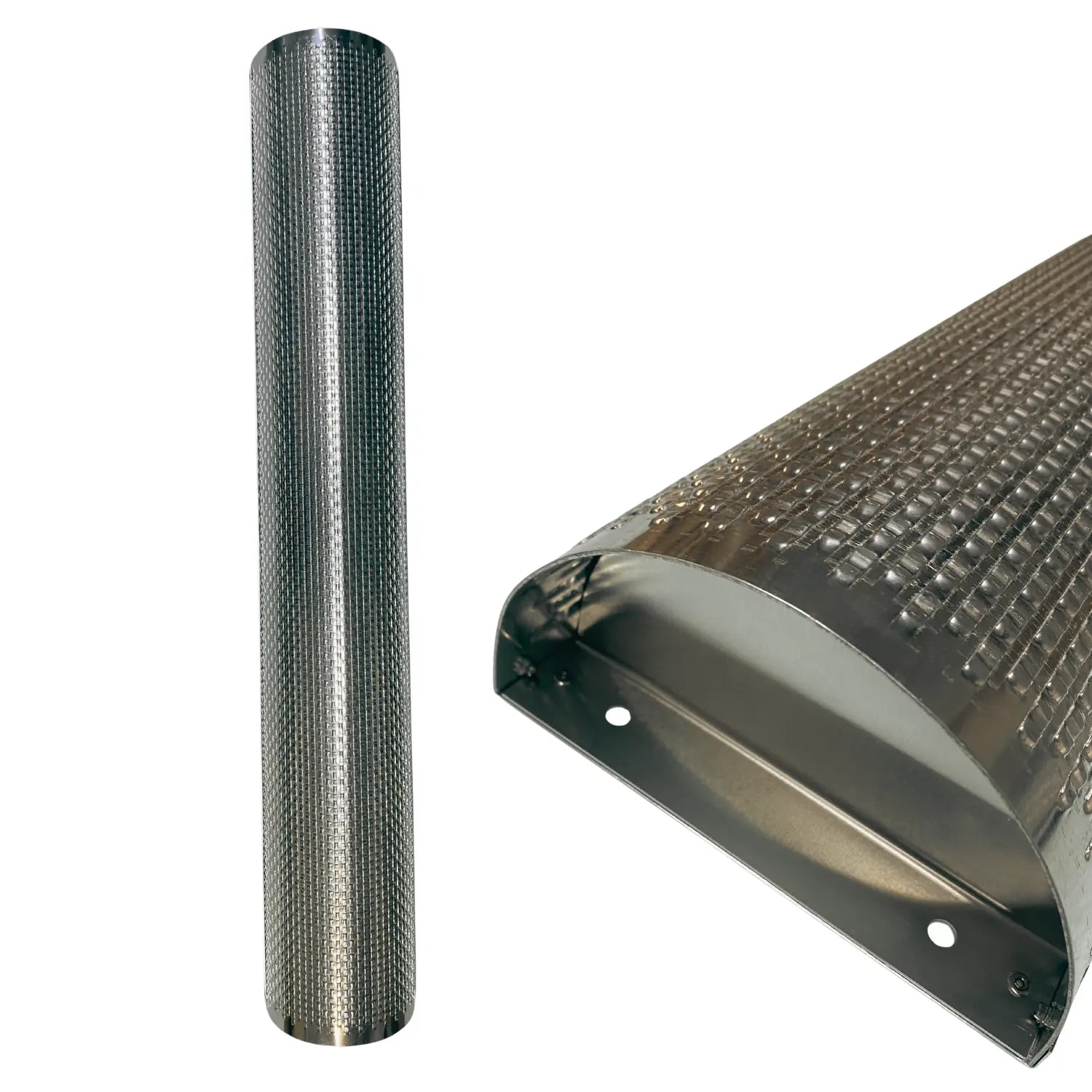
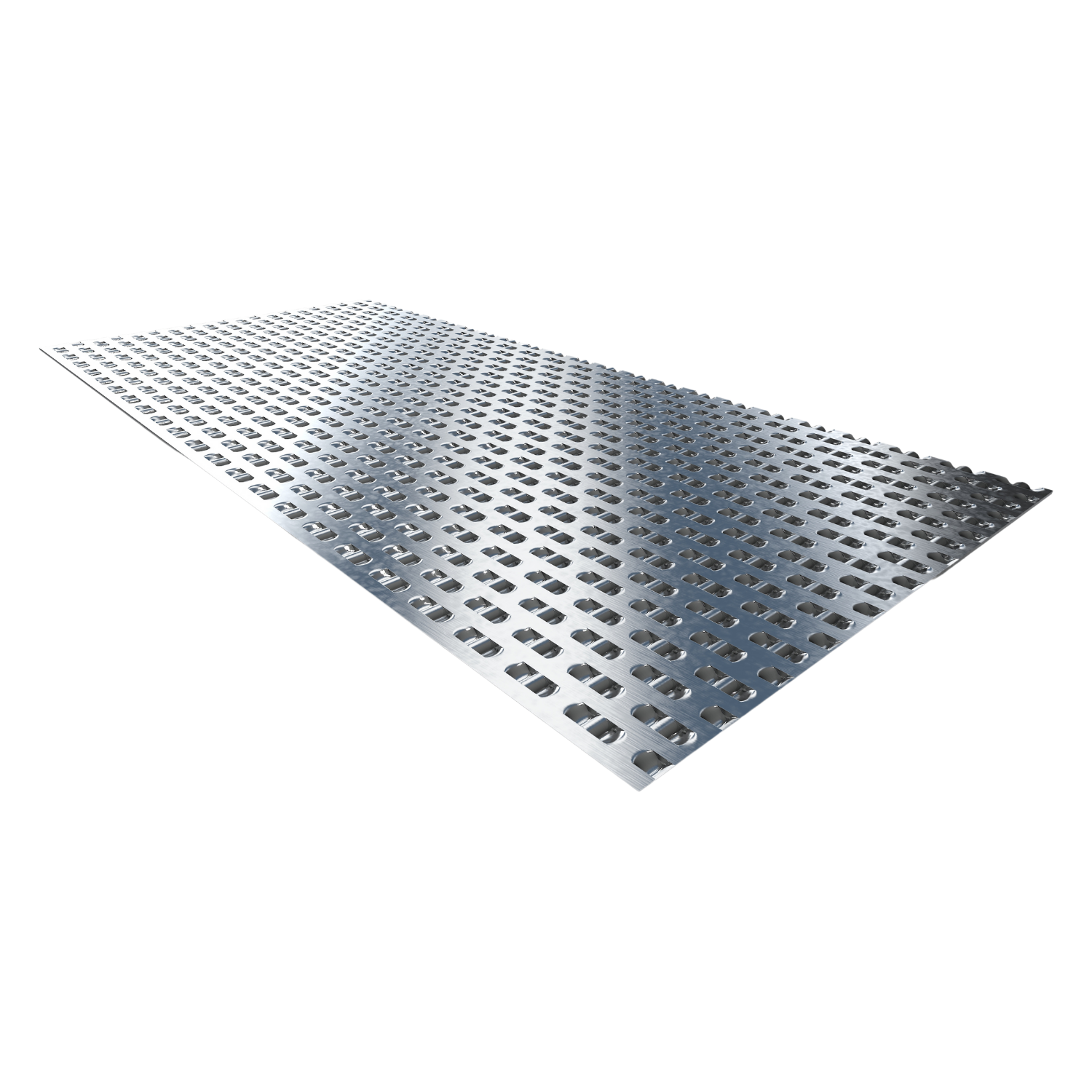
ABSORA-sheet is a patented metamaterial structure, developed and manufactured in Germany.
Its geometry and unique manufacturing process combine several physical principles – including MPA/MPP, Helmholtz resonators, VAMM and acoustic black holes – in a single METAMATERIAL.
Operating principles that can be tuned
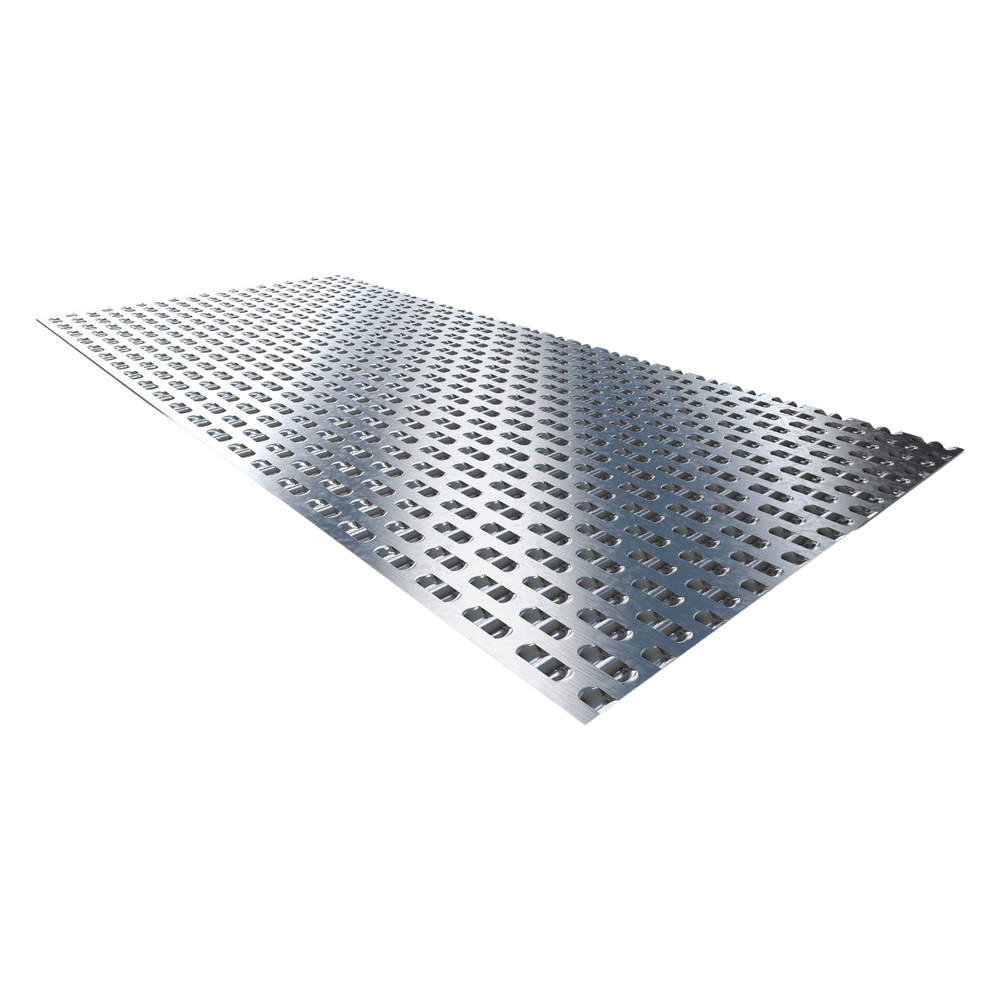
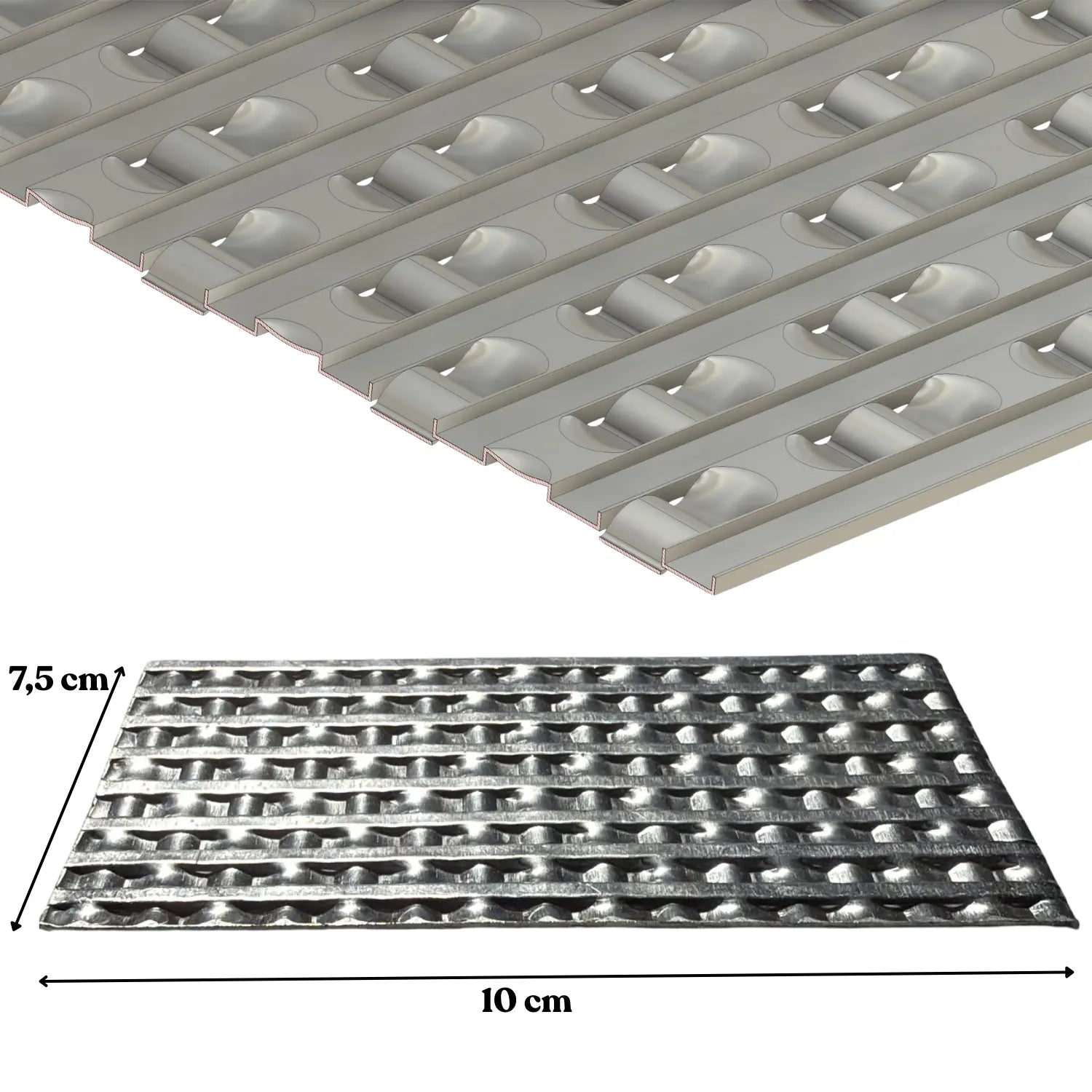
The small gaps can be adjusted between 0.05 and 0.8 mm. The resulting micro-vortices rub against each other within the gap itself, causing energy loss from the sound.
Similarly, the special concave and convex shape between the gaps creates friction directly on the shaped area, thus activating it as a friction surface. This curved friction surface can be adjusted between 2 and 12 mm and generates a second, equally high peak despite the same gap size.
The settings can also be used to apply coatings if desired. Therefore, there are no limitations in this regard.
The plate is mounted at a distance of λ/4 from the sound-reflective wall. At the highest particle velocity, the sound is converted into friction, depending on the frequency.
The front and back surfaces act like an air spring. However, this effect can only occur if the sound can “see” the rear volume. This happens when the front and back surfaces have different phases, frequencies, sound pressure levels, and velocities, and these differences are not too great.
It is also possible to divide the air volume, similar to an inverted musical instrument. This allows for the targeted absorption of specific frequencies that are causing problems.
The thickness of the base plate can range from 0.2 to 4.5 mm. It can be made from any desired material – from aluminum to stainless steel 1.4301.
This eliminates the need for a supporting frame structure, perforated sheet metal, or housing. Furthermore, the surface's enormous inherent stability allows it to be shaped three-dimensionally to facilitate diffusion and scatter sound.
The ABSORA base plate itself already exhibits slight 3D effects. It's also worth noting that the distance described in point 2 can cover multiple target peaks.
Both the design of the individual shapes and their positioning on a flat sheet are freely selectable. This allows for both cutouts and different arrangements.
We use this capability to create periodic arrangements. The entire plate, with its mass, or the individual shapes, can thus be adapted as plate resonators. Depending on their mass and design, they function like ANC headphones.
In this process, the bending wave is slowed down considerably and the vibration is directed into areas that dissipate its energy.
Through temperature control and targeted design adjustments, we can customize the panel to meet specific requirements. So-called CLD base sheets, such as Bondal, can also be used to further enhance the effect.
The geometry of the lateral gap corresponds to the shape of a locked spring. This generates high tension, thus enabling lightweight construction. At the same time, it transmits shocks to the entire plate and dissipates vibrations by converting them into frictional losses.
All lightweight products suffer from a mass inertia problem, causing them to sing, drone, rattle, buzz, etc. With our structure, this is no longer an issue. We simply don't have this problem.
With a controllable porosity of the ABSORA sheet between 0.3 and 2.5%, we can control the convection.
By placing it in a space between two plates, the mass-determined natural frequency and the resonance cavity, which always cause problems in the range between 200 and 800 Hz, can be addressed.
Furthermore, low porosity allows the air vortices to be designed, depending on their placement and flow velocity, in such a way that no pressure losses occur. Instead, a “sweet spot” is found where micro-vortices almost completely absorb or dissolve the larger following vortex.
This effect can be artificially created by a negative pressure within the mold or can result from a perfectly chosen design.
The length of the individual molds can currently range between 5 and 40 mm. Depending on the base material, this makes it possible to use small micro-vibrations to remove impurities.
The lateral movement creates a shearing motion, which causes the impurities to detach again.
Our METASTRUCTURE makes it possible not only to address acoustics and lightweight construction, but also to integrate aerodynamics, EMC, dosing and distribution, filtration, as well as protection and safety directly into a frame or carrier plate.
Our standard version is ideal for near-field acoustics. It performs better than porous absorbers from 60 dB(A) upwards, without dampening heat. Resonant absorbers do not saturate at high sound pressure levels.
High sound pressure levels are primarily found near noise sources, as well as on floors, corners, edges, etc. Areas in the center of a room are better treated with porous absorbers. For this, we recommend considering the αw curve.
We place great emphasis on resource conservation. Our fully automated, high-speed process allows us to cost-effectively design our metamaterial to the desired target values for series production.
Using material for absorption areas that are not needed and cannot be used for other frequencies is wasteful. This is especially true for a logarithmic curve, where the primary peaks have a significantly greater impact, and also with regard to the ear's tonal perception.
Our goal is to fully automate the acoustics industry and to think about lightweight construction systematically – without secondary problems with acoustics and fire protection.
We are still looking for engineers and experts who would like to turn their ideas into series-produced products that don't fail because of the price.
Why ABSORA-sheet
No compromises! Both acoustic and lightweight solutions can do without a lot of mass, fibre migration, fire-protection and recycling issues, thermal insulation, support structures or frames, vibration absorbers or seals, and can be manufactured fully automatically.
Pure focus and systemic thinking
The focus is on parametric adjustability and the efficient use of the available surface for the desired target ranges – with maximum effect directly at the source. Broadband solutions waste far too much material and installation space on values that pose no problem at all for the specific application. And they are not even cheaper per square metre.
Material-independent structuring
The disruptive process is material-independent and makes it possible to introduce individual structures into base materials 0.3 to 4.5 mm thick, leaving areas free for forming as required. Aluminium, stainless steel, plastic and wood can thus be designed individually – including smooth areas where desired.
Less weight, more impact
ABSORA-sheet cuts noise and CO₂ alike — and stays fully recyclable at the end of its life.
Listen — hear the difference
Tip: switch sources while playing to hear the difference at the very same moment.
Industries
- Automotive
Weight reduction and noise control in truck cabs and engine compartments.
- HVAC & Heat Pumps
Acoustic optimisation of heat pumps for greater acceptance in residential areas.
- Medical & Food
Fibre-free, easy-to-disinfect sound absorbers for clinical cleanrooms, food producers and commercial kitchens.
- Machinery & Plant Engineering
Robust, heat-conducting acoustic enclosures for motors and pumps.
- Energy & Infrastructure
Noise control for ventilation systems, battery storage and PV inverters.
- Commercial Real Estate
Elegant ceiling panels with integrated heating and cooling for modern offices.
- Aviation & Drones
Effective noise reduction for drones in civil and military applications.
How we work
Every project starts with a comprehensive consultation to capture all relevant conditions. After a mutual non-disclosure agreement, we record the current situation, define the target values to be achieved and analyse problems and requirements.
We look at sound pressure levels, frequencies and peaks, heat build-up, insulation and damping, near and far field, as well as the available distance and installation space. On this basis we prepare an initial analysis and recommendation on which solution should be used, choosing from the full range of acoustic options such as porous absorbers, MPA, resonators, VAMM, Acoustic Black Hole (ABH), diffractors, diffusion, insulation, vibration absorbers and other technologies.
In the next step we verify the developed solution directly under real conditions. With our rapid-prototyping kit Soundbuster Auto we come to the customer and first measure the current situation. We then build up a maximum solution and comprehensively measure its effect.
Based on the measurement results we optimise the solution step by step. Through gradual reduction we reach the desired target value with minimal material input, the smallest possible footprint and the best possible cost.
Finally, all results are summarised in a detailed evaluation. It includes before/after comparisons, an OPEX calculation and a clear explanation of why and how individual measures work — and why previous solutions sometimes failed to deliver the desired success. The final recommendation takes into account footprint (transport costs, weight and recycling), technical function and price.
If product developments are carried out as part of the free service, all IP rights remain with ABSORA.
Custom mounting plates are designed to customer specification (drill holes, material type, etc.) and fitted with standardised modules. High delivery availability and economical production in the dark factory are possible from a quantity of just 1.
Highly functional series development — consistently optimised for material, design and powder coating. Material thicknesses from 0.3 to 5.0 mm and almost any material type can be realised on request.
Metamaterial optimisation and design for maximum function with minimal material input.
Multifunctionality to reduce the number of components: several functions are combined in one part, e.g. as a load-bearing component or frame, or to integrate acoustics, EMC, protection, distribution, filtration, catalysis or anti-capillary effect — for a minimal footprint.
Fully automated production.
Testimonials
What our partners say about ABSORA-sheet
See how our patented metamaterial is already proving itself successfully in the field.
ABSORA-sheet won us over completely from the start! At very manageable cost we more than halved the noise from our machines — with an exceptionally hygienic solution. On top of that, ABSORA advised us superbly, far beyond what other acoustic consultants offer.
Working with ABSORA is extremely productive. Time and again the team impresses with unconventional solutions to technical challenges — and in record time. Their hands-on mentality and cost awareness help us reach market-ready results fast.
FAQ
ABSORA-sheet is a patented, micro-perforated metal metamaterial for sound absorption. It works broadband from 250 to 5000 Hz, is fibre-free and 100% recyclable.
Yes. ABSORA-sheet achieves broadband absorption without mineral fibres while being 60–80% lighter than mineral wool. It works as a fibre-free alternative in many applications.
Because ABSORA-sheet is made of metal and releases no fibres, it is hygienic and can be wiped down. That makes it suitable for food and medical environments.
In principle, yes — almost any metal works. We usually keep aluminium and stainless steel in stock.
Depending on the chosen metal, almost any thickness between 0.15 mm and 3.0 mm is achievable.
No. Thanks to its very high stiffness, ABSORA-sheet is completely self-supporting and needs no additional support structure.
Ideally ABSORA-sheet is mounted with an air gap (cavity) in front of a sound-insulating wall. In some cases that back panel can be omitted entirely — contact us for a customised design proposal.
Through a combination of a mass-spring system and laminar friction. The special lateral micro-perforations make the air spaces in front of and behind the sheet interact, and the integrated structures act as a periodically arranged resonator — making ABSORA-sheet a true vibroacoustic metamaterial (VAMM). The result is far broader-band damping than conventional solutions.
Conventional absorbers (e.g. rock wool) are built from many layers: support structure, insulation, membrane and perforated sheet. ABSORA-sheet does away with all of that — it is rigid enough to mount without a frame and only needs air behind it. And unlike other micro-perforations, our manufacturing process needs no expensive lasers or special tooling.
Rock wool or foam insulate heat and take up a lot of space — ABSORA-sheet does not. So it can be used directly as a heating or cooling surface in wall and ceiling panels, and in ventilation ducts (HVAC) it saves energy by significantly reducing the cross-section of the silencers needed.
You describe the noise problem, we develop a suitable ABSORA-sheet geometry, install it and test a prototype on site. Write to us at info@absora.eco.
Quieter. More sustainable.
Tell us about your noise problem. We will develop the right ABSORA-sheet solution.
Start consultation